Garage Door Opener Selection: AC, DC, Trolley or Shaft Drive?
AC and DC describe motor types; trolley and shaft drive describe mechanical arrangements. They are not four equivalent alternatives. Select a documented operator for the door assembly, travel, duty and installation space, then confirm supply voltage, controls, safety interfaces and the included accessories.

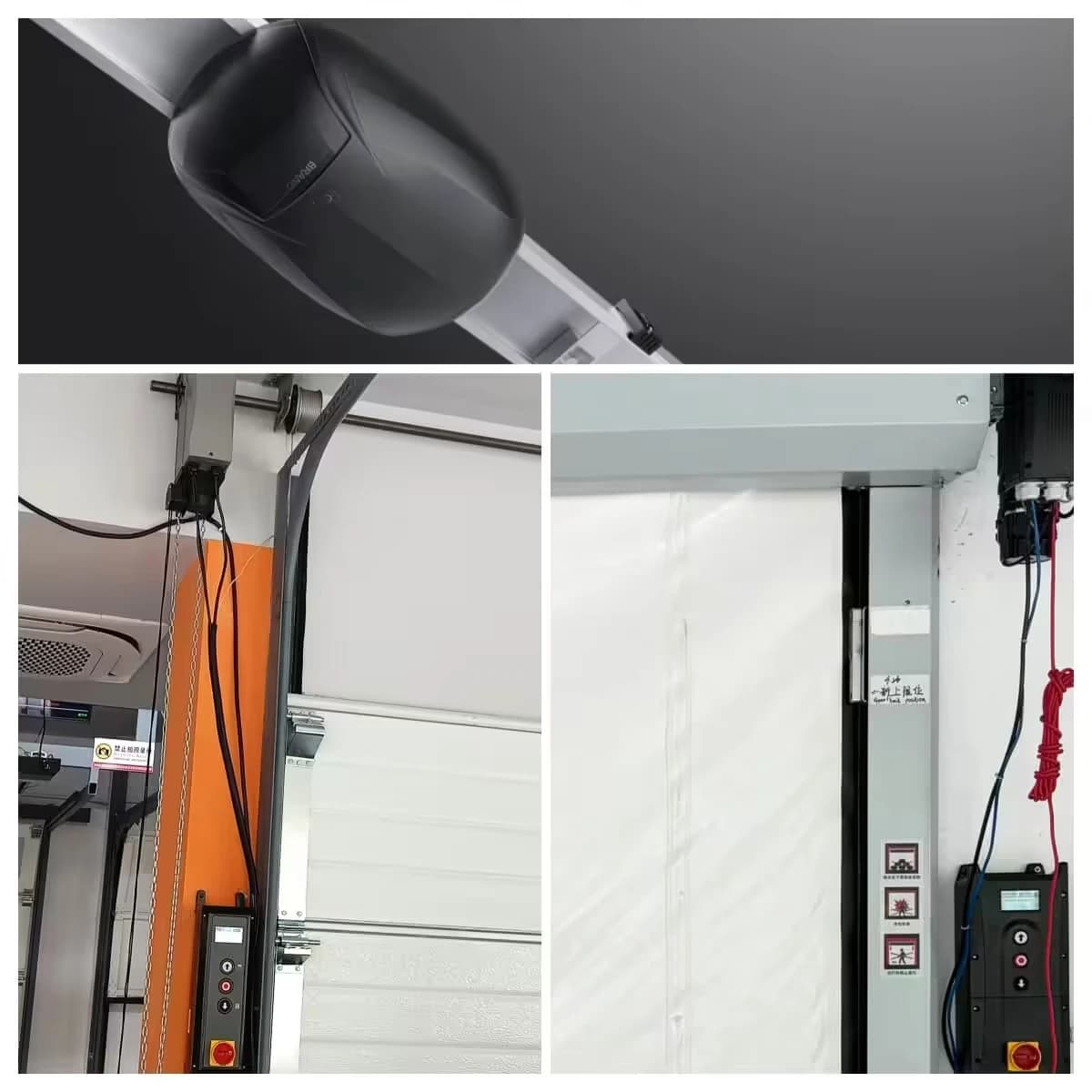
A buyer may ask me whether a DC opener is better than a side-mounted unit. I would separate those two questions first. The motor technology and the method of moving the door describe different parts of the system, and a clear enquiry should identify both.
AC and DC describe motor types; trolley and shaft drive describe mechanical arrangements. They are not four equivalent alternatives. Select a documented operator for the door assembly, travel, duty and installation space, then confirm supply voltage, controls, safety interfaces and the included accessories.
At a glance
| Review item | What to compare | What to confirm |
|---|---|---|
| AC / DC | Motor technology | Confirm actual model functions and supply requirements |
| Trolley drive | Overhead rail and door connection | Review travel, mounting and available rear space |
| Shaft drive | Drive connection at the shaft | Review shaft compatibility, mounting and access |
| Force / torque | Different mechanical rating quantities | Use the relevant model selection criteria |
| Controls | Activation, protection and connectivity | Identify compatible included components |
What should you compare between AC and DC operators?
Compare the actual model functions and ratings, not general promises attached to a motor label.
Ask for the model datasheet and list the functions that matter to the project: operating sequence, duty, controls and any power-outage requirement. Soft start, battery support or connectivity should be confirmed for the quoted model and supplied configuration. Do not assume them from AC or DC alone.
Also distinguish the mains supply from the motor technology. Record the available voltage, frequency and phase, then ask the supplier to confirm the correct variant. I would keep this information on the quotation so the receiving team can check the delivered identification against the order.
When does the drive arrangement matter?
The arrangement determines which mechanical interfaces and installation spaces need review.
A trolley arrangement uses an overhead rail and a connection to the door. A shaft-driven arrangement uses the relevant shaft interface. This distinction tells you where to focus the drawing review; it does not make every operator of either type suitable for every sectional door.
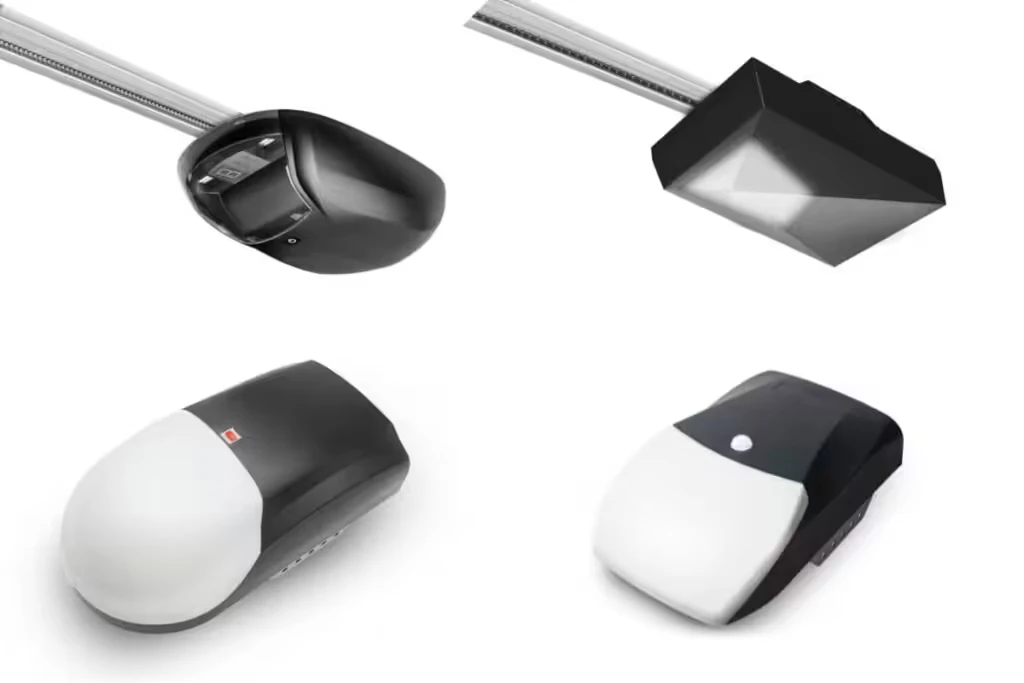
Show available space and the proposed mounting location. Ask how the arrangement relates to the selected track layout and what access must remain available. I would request an installation envelope for the exact model rather than estimate the space from a catalogue photograph.
Is a higher force or torque number enough?
No. Compare ratings that describe the same function and confirm the manufacturer’s application limits.
Pulling force in newtons and output torque in newton metres are different quantities. Do not rank one against the other as though they were the same capacity measure. Request the supplier’s selection for the door configuration and operating pattern you have described.
Door size alone is not a complete selection brief. Include the door construction, track arrangement, available weight information and expected use. If the existing door is difficult to operate or its condition is uncertain, have it assessed by a qualified installer instead of treating a larger motor as the remedy.
Which controls and accessories should appear in the quote?
List each required function and the actual components proposed to deliver it.
Separate activation devices, safety-related devices, receivers, wall controls and any connectivity accessories. For each item, ask whether it is included, optional or supplied by others. The quotation should identify the interface and any additional installation work needed.
Matching a radio frequency alone does not prove remote-control compatibility. Ask for the supported protocol and model combinations. Similarly, a terminal description does not establish that any third-party device can be connected. I would have those compatibility statements confirmed before a distributor promises a combined package to a customer.
What helps with support after the sale?
Keep the delivered model, configuration and relevant instructions traceable.
A useful distributor record includes the operator identification, control variant, supplied accessories and the applicable instruction set. Ask which parts can be ordered separately and which information the supplier needs for a future replacement enquiry. Do not assume a later product generation accepts the same accessories.
Before accepting the order, clarify the agreed responsibility for installation and commissioning. This article is a selection guide, not a wiring or adjustment procedure. The practical goal is a package whose interfaces and responsibilities are clear to both purchasing and the installer.
What should you include in your enquiry?
You do not need to fill every gap before contacting me. Please share what is available and identify what is still uncertain, so the next questions can focus on your project.
| Information | Include | Review |
|---|---|---|
| Door assembly | Model, construction, size and track layout | Identify missing weight or condition information |
| Operating need | Usage pattern and desired functions | Separate requirements from optional features |
| Site interfaces | Power supply and mounting space | Use the exact proposed model |
| Accessory schedule | Controls, sensors, remotes and connections | Confirm compatibility and supply responsibility |
When further review is needed
Do not use this article as installation, wiring or safety-validation instructions. Product features, permitted applications and local requirements need confirmation for the selected assembly. A general market guide does not establish JBL model performance.
Frequently asked questions
Is a DC opener the same as a belt-drive opener?
No. DC describes the motor type; belt drive describes a transmission arrangement. Check both in the model specification.
Will any shaft operator fit a high-lift door?
No. The specific door, shaft, travel and operator requirements need to be checked together.
Can I compare a torque rating directly with pulling force?
No. They describe different quantities. Request selection against the applicable model criteria.
Will remotes with the same frequency work together?
Not necessarily. Protocol, receiver and model compatibility also need confirmation.
Product Documents & Further Reading
This is a buyer’s checklist, not a configuration approval or installation instruction. Review the product documents and confirm the selected assembly against your requirements. The illustrations explain what to look at; they do not establish dimensions or performance.