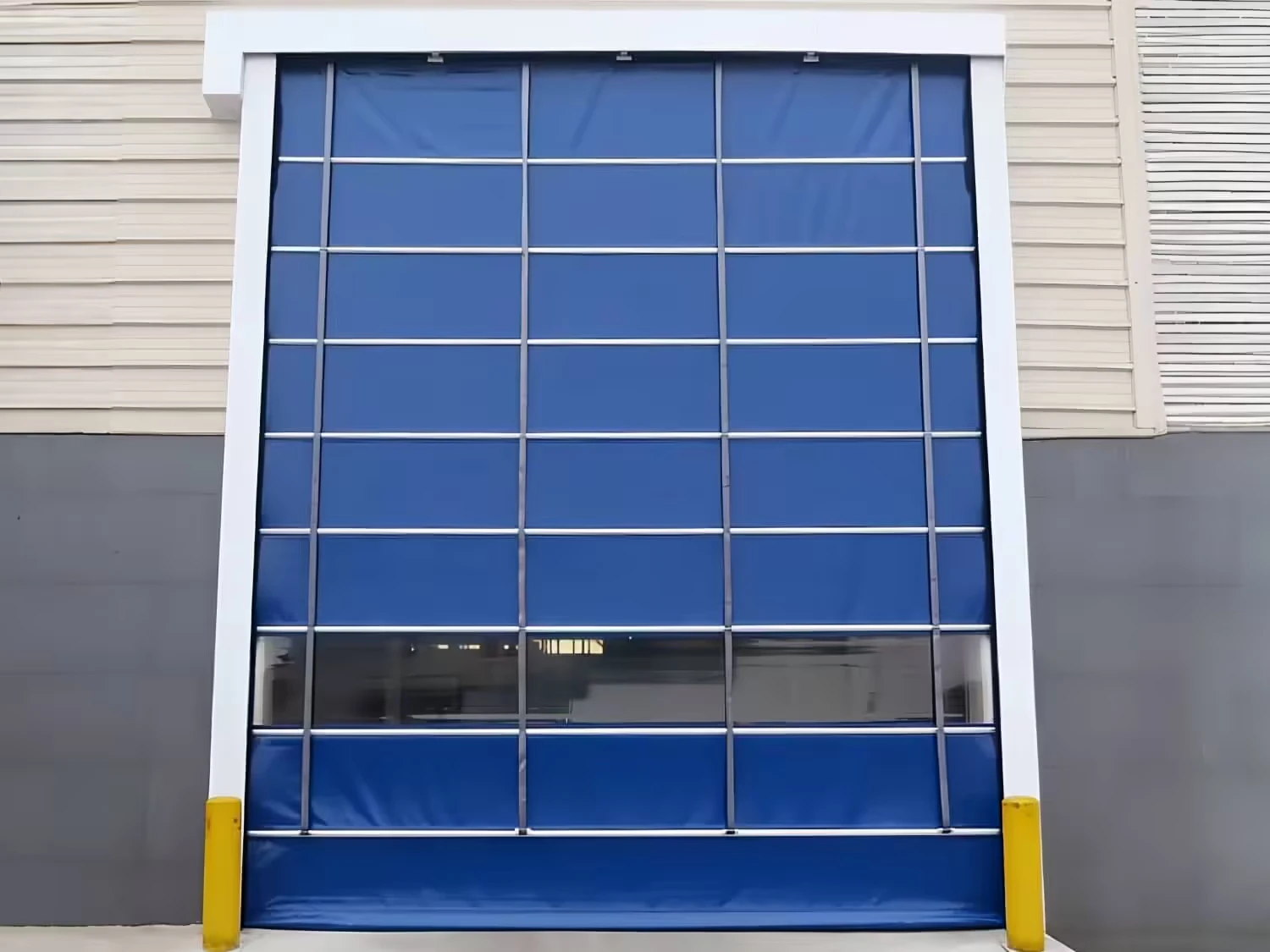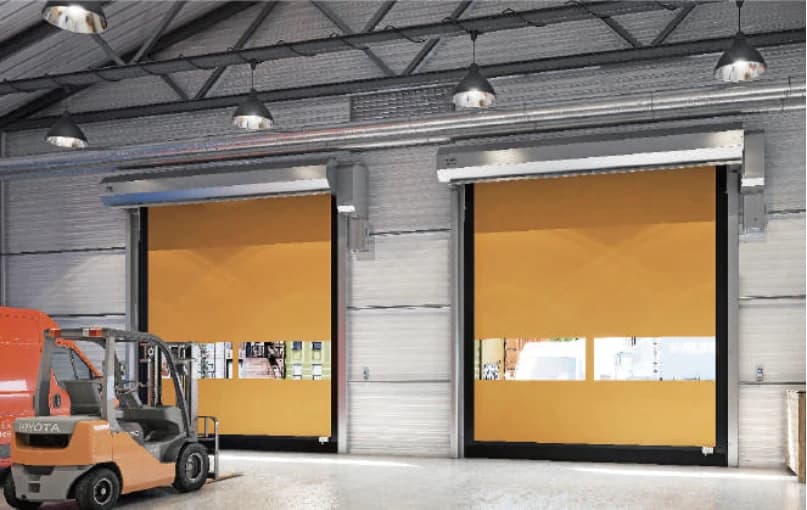
High-Speed PVC Door or Sectional Door: Which Fits Your Opening?
Compare traffic, installation space and separation requirements before you request a quotation.

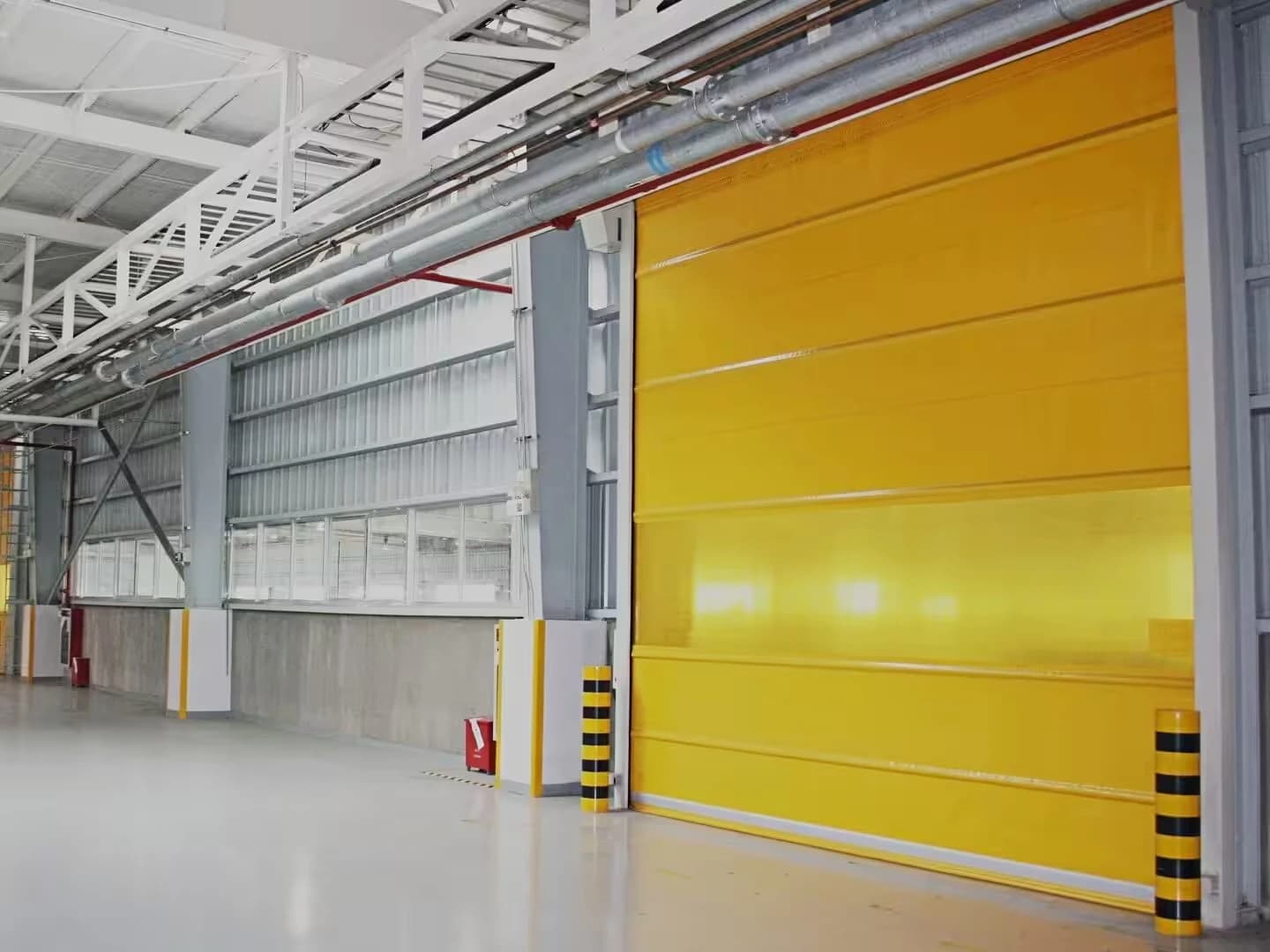
Your warehouse needs a new door. One quotation offers a fast PVC curtain; another offers an insulated sectional door. Both fit the stated opening size. How do you decide whether either proposal fits the way you work?
Start with traffic, available installation space and what the opening must separate. Consider a high-speed PVC door when frequent passage is the main problem to investigate; consider a sectional panel door when the building closure and panel configuration are central requirements. Then check the exact duty, controls, sealing and site interfaces. Neither the door name nor opening speed alone confirms suitability.
At a glance: what are you comparing?
I would use this table to organise your enquiry, not to select a door without reviewing the site. The two product families are starting points. Their individual configurations still need checking.
| Buyer concern | High-speed PVC door | Industrial sectional door |
|---|---|---|
| Door construction | Flexible curtain; confirm the proposed curtain and guide arrangement. | Connected panels travelling on tracks; confirm the panel and lift arrangement. |
| Traffic | Ask for operating duty at your opening size and peak traffic pattern. | Ask for the operator duty and cycle requirements of the complete assembly. |
| Installation space | Check the head unit, side guides, fixings and service access. | Check headroom, side room, backroom and the proposed track path. |
| Separation | Define the required air, dust or temperature separation; request supporting specifications. | Define panel, seal and closure requirements; request whole-door evidence where relevant. |
| Controls and safety | Identify how vehicles and people are detected and how closing is controlled. | Identify activation, protective devices and any pedestrian interfaces. |
| A useful quotation | A named configuration with included controls, accessories and installation scope. | A named configuration with panel, track, operator and installation scope. |
What passes through your opening?
Describe the busiest period, not only the daily average. A door that opens occasionally for a delivery faces a different requirement from a passage used repeatedly by forklifts during a shift change.
If you asked me to compare the two options, I would first ask what passes through, the largest load dimensions, the approach direction and whether pedestrians use the same route. Please describe waiting, congestion or unwanted openings as well as the number of cycles.
Opening speed is only one part of the passage sequence. Detection, waiting time, how long the door stays open and the closing sequence also matter. Ask the supplier to explain the proposed control sequence for your traffic. A catalogue speed does not describe that complete sequence.
Will the proposed arrangement fit?
Matching the clear opening width and height is not enough. The door assembly also occupies space beside, above and, depending on the arrangement, behind the opening.
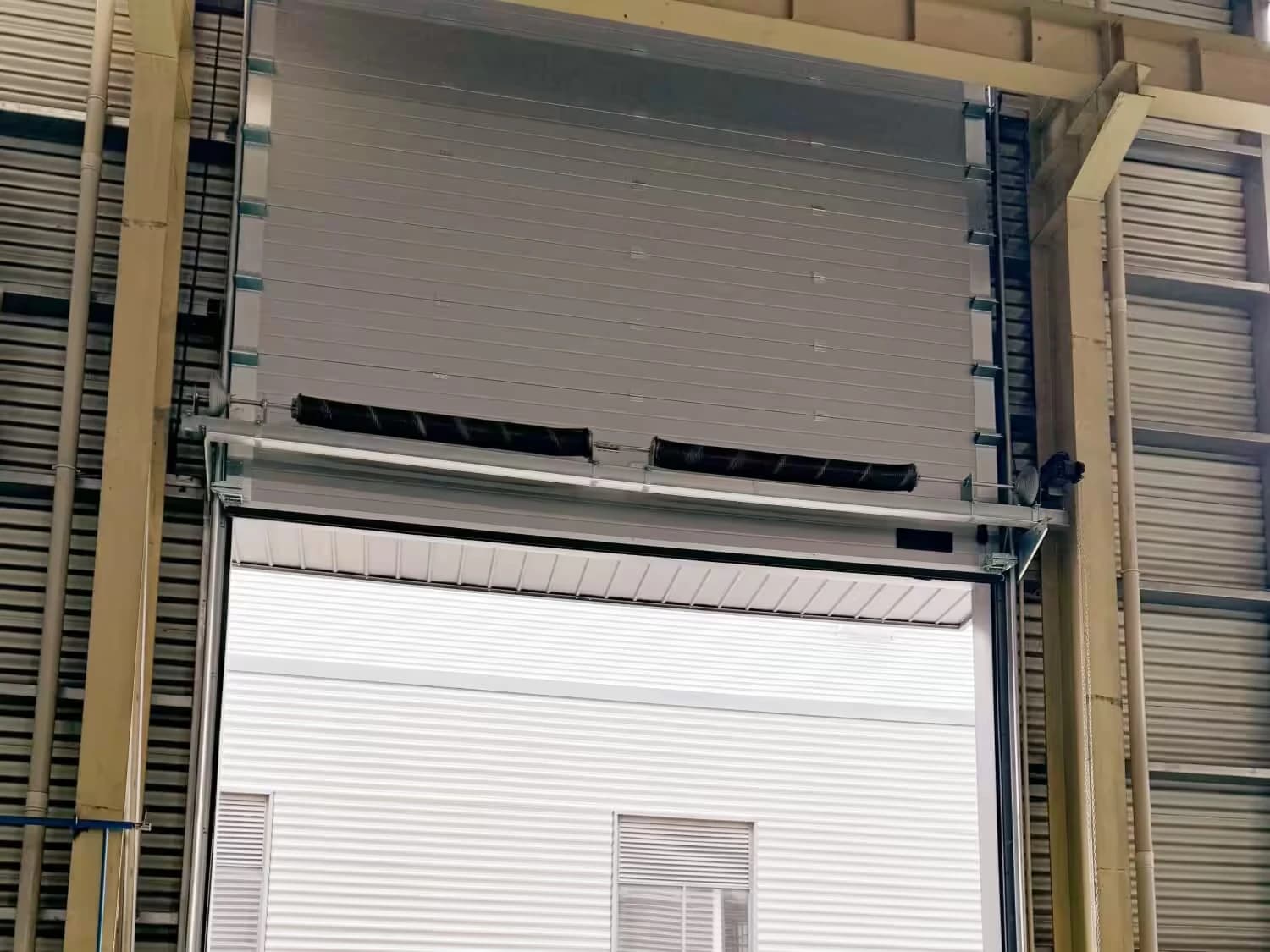
For a sectional door, I would ask you to show beams, pipes and other services near the proposed track route. For a PVC door, I would ask for space around the head unit and side guides. In both cases, the fixing surfaces and access for maintenance need discussion.
Please label measurements from the finished opening and floor level, and mark anything approximate. The lowest obstruction may matter more than the ceiling height. Ask for the selected arrangement on a drawing before confirming the order; do not adopt a generic headroom number as a final installation dimension.
Use the door-opening measurement checklist →What must the door separate?
Explain the required result: weather protection, temperature separation, dust control or closure outside operating hours. These are different requirements and should not be hidden behind the single word “insulated”.
For an external opening, describe exposure and the project’s required wind or weather criteria. For a temperature difference, identify conditions on both sides and how the opening is used. Ask what the proposed rating covers: a material, a panel or the complete installed door. Avoid comparing unlike measurements.
Compare the selected configuration rather than assuming that a door category establishes its operating speed or closure performance. Describe daytime traffic and out-of-hours closure as separate requirements in your enquiry.
I would keep any specialist requirement visible in the brief rather than assume a standard door covers it. Compliance, specialist environmental suitability and project acceptance evidence need explicit confirmation.
Which questions matter in your situation?
The situations below are illustrative buying scenarios, not customer case studies or automatic product recommendations.
| Your situation | Question to resolve | Useful information to share |
|---|---|---|
| Busy internal forklift passage | What duty and activation arrangement match peak traffic? | Peak movements, approach routes, largest load and pedestrian routes. |
| External warehouse opening | What weather exposure and out-of-hours closure are required? | Opening orientation, exposure, working hours and required closure criteria. |
| Temperature-controlled separation | What performance is required under the actual operating pattern? | Conditions on both sides, open time, traffic and any condensation concerns. |
| Low headroom or services overhead | Can the proposed assembly and service access fit? | Measured headroom, side room, backroom and labelled obstacle photographs. |
| Replacement of an existing door | Which existing interfaces can be retained, if any? | Existing labels, track and fixing photographs, dimensions and the current problem. |
Are the two quotations equivalent?
Compare the full configuration before comparing totals. A lower price can reflect a different scope rather than a better offer. I would put both proposals beside the same requirement brief and identify each unresolved item.
| Check | Ask each supplier to identify | Why it affects the decision |
|---|---|---|
| Door assembly | Model, opening dimensions, curtain or panels, guides or tracks and finish. | The product name alone does not define what will arrive. |
| Operator and controls | Specific operator, power supply, activation method and included control equipment. | Different packages may require additional equipment or site work. |
| Protective devices | Included devices, intended functions and interfaces requiring site confirmation. | Do not assume everything shown in a brochure is included. |
| Building work | Fixings, support structure, wiring, installation and commissioning responsibilities. | Unallocated work can remain outside both quotations. |
| Evidence and handover | Drawings, agreed inspection records, manuals and required project documents. | Agree the acceptance basis before execution. |
| Commercial scope | Currency, quantities, delivery terms, freight/tax scope, validity and proposed schedule. | Compare the same commercial basis and confirm exclusions. |
If a dimension or configuration changes, ask for a revised drawing or item list and confirmation of any price or schedule effect. Keep that revision with the quotation so the order references one agreed configuration.
Read the complete quotation comparison guide →When should you reconsider the choice?
Pause the comparison if a supplier’s answer depends on an assumption you have not confirmed. Examples include unknown external exposure, an unresolved track obstruction, an unspecified operating duty or a specialist requirement with no supporting evidence.
A single door may also be asked to solve different daytime and overnight needs. Discuss those requirements separately before accepting one product as the answer. This does not mean you must order two doors; it means the proposed solution should explain how each requirement is addressed.
This guide supports purchasing discussions. It is not an installation design or an instruction for adjusting tracks, springs or protective devices. Site-specific technical review remains necessary.
What can you send before you have a drawing?
You can begin with approximate dimensions, photographs and a description of use. Please mark estimates clearly. They help start the discussion; final dimensions and interfaces still need confirmation.
| Share what you have | What it helps clarify |
|---|---|
| Opening width and height, with units | The starting size requirement; identify estimates. |
| Photographs from both sides and above | Obstructions, approach routes and the surrounding building. |
| What passes through and how often | Traffic pattern and the operating duty to discuss. |
| Indoor/outdoor location and separation needs | Environmental conditions and the intended closure function. |
| Quantity, project country and desired timing | Quotation scope and the schedule to discuss—not a confirmed delivery promise. |
If you have an existing quotation, you can also share its configuration list and the items you are uncertain about. Please remove any information you do not wish to disclose.
Frequently asked questions
Is a high-speed PVC door always the better warehouse door?
No. Warehouse openings have different traffic, exposure, closure and space requirements. Compare a specific proposed configuration against the opening’s use rather than choosing by building type alone.
Can a sectional door be used for frequent traffic?
The answer depends on the complete assembly and operator duty. Ask for the proposed configuration’s operating limits at your size and traffic pattern; do not decide from the category name.
Can I use the same quotation for several equal-sized openings?
Only after checking that their conditions and requirements match. Equal dimensions do not establish equal exposure, traffic, controls or installation interfaces.
Which option costs less?
A meaningful comparison needs the same opening brief and clearly stated inclusions. Compare equipment, site work, documentation and delivery scope before deciding which total represents better value.
Do I need a complete technical drawing to enquire?
No. Start with what you have, identify estimates and add photographs. A final configuration and installation interface still need confirmation before the order proceeds.
Sources and scope of this guide
This is a buying framework, not a performance specification. JBL documents identify the product families; Confirm the selected configuration against the relevant JBL Entrance product documents.
- JBL Entrance Door Systems Catalogue, V1.0, 19 September 2026 and JE-1005 Industrial Sectional Door brochure, 22 September 2026. Refer to the selected product’s documents and confirm the final configuration.